MedMind

A clinician-focused hub of AI prompt generators and decision-support tools

Your Support
For MedMind to remain active and relevant, it needs to be funded primarily by the readers who use it. If you feel MedMind offers something genuinely valuable and deserves to continue, please support it. A minimum contribution of €5 is recommended, as smaller amounts are largely absorbed by fees and taxes

__________________________________________________________________________________________________________________________
JAMA (Research of the Year 2025)
For this inaugural Research of the Year roundup, JAMA Medical News asked the journal’s top editors to nominate their favorite studies published in JAMA over the past year—the articles that they thought were the most impactful, the most newsworthy, and the most novel—and why they chose what they did. From these nominations, Editor in Chief Kirsten Bibbins-Domingo, PhD, MD, MAS, and Executive Editor Gregory Curfman, MD, handpicked the final selections.
Among them is a systemtic review about the
"Testing and Evaluation of Health Care Applications of Large Language Models"
______________________________________________________________________________________________
_____________________________


Prompts for health professionals (Free Version)
Prompting techniques can help health professionals obtain more structured, transparent, and clinically useful AI outputs. Methods such as few-shot prompting, ReAct, self-consistency, and multi-step workflows can improve differential diagnosis generation, next-step planning, and educational explanations. Used well, they support clearer reasoning, safer escalation decisions, and better alignment with the clinical setting. They are best treated as cognitive scaffolds—not substitutes for clinical judgment, guideline review, or patient-specific decision-making.
___________________________________________________________________________________________________________________________


A𝒾sk (Free Version)
A𝒾Sk is a prompt generator for Health Professionals. Users select a role—such as Writer, Editor, Question Writer, Mentor/Feedback partner, Brainstorming partner, or Anki Flashcards creator—and the site assembles a tailored prompt that can be copied with one click. It also shows brief, role-specific guidance (for example, a quick primer on Anki and common flashcard formats). A modal-style info panel adds definitions and helpful external links for additional context.


A𝒾BG (Trial Version)
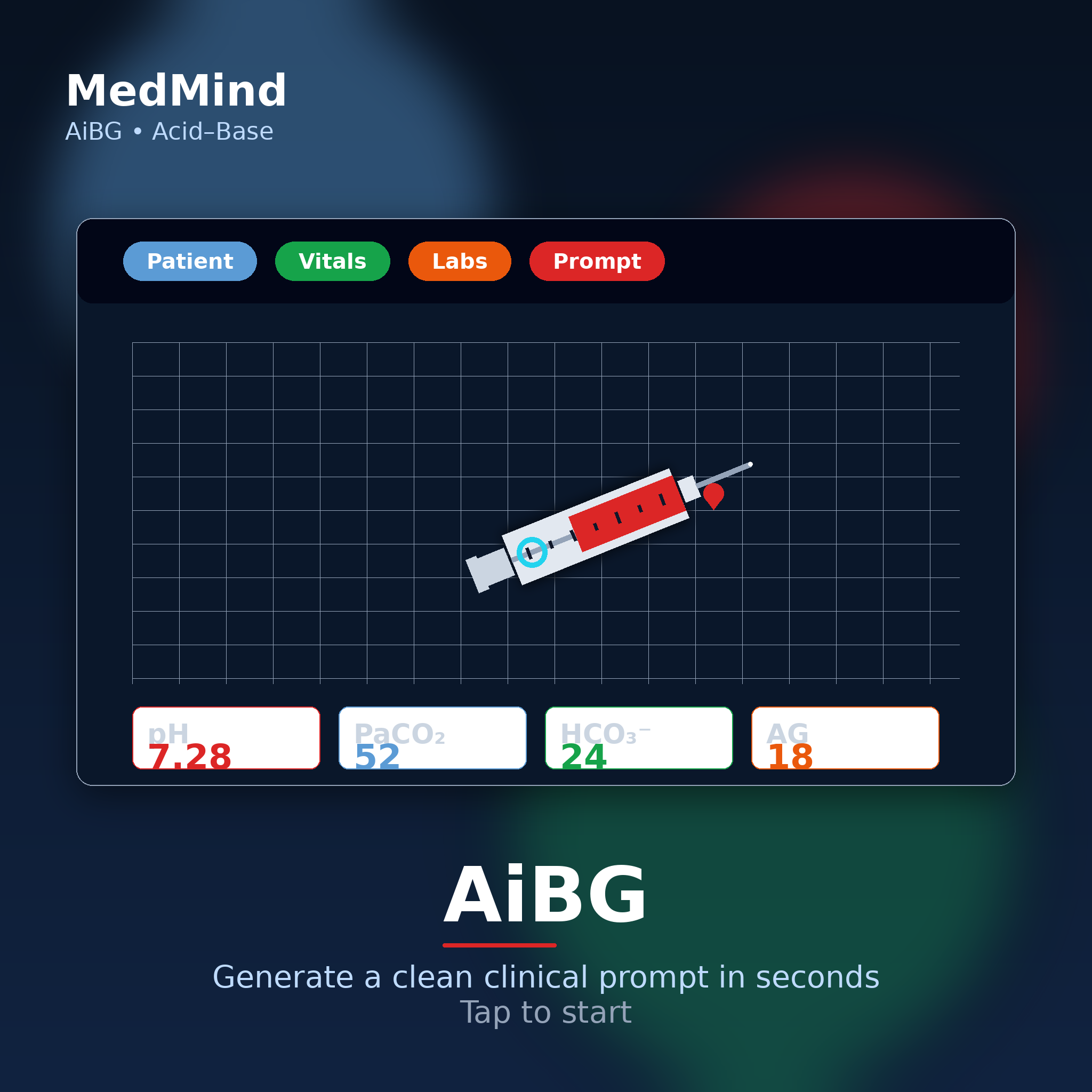
A𝒾BG is a tabbed, clinician-focused prompt generator for ABG/VBG interpretation and acid–base analysis. Users choose a unit system(US/SI), select an interpretation framework (physiologic, base-excess/Copenhagen, or Stewart), and—when permitted—tailor reference ranges. They then enter patient context/demographics, vital signs (including NEWS2), and blood-gas/chemistry data. The interface computes key derived indices (anion gap variants, osmolality gaps, A–a gradient, SID/SIG) and outputs a copy-ready prompt for an LLM, alongside save/reset tools and a brief “moments in history” timeline. An intervention log enables structured documentation of major clinical actions.
In the free version, users can’t manually change any reference values—this includes ABG analysis settings, A–a gradient reference values, vital-sign ranges, and laboratory reference ranges. The only exception is when those reference values are imported from a JSON case file.
To try the app, download a sample JSON case file (
Case 1, Case 2, Case 3, Case 4).
PC: Right-click the file → Save as… → name it case_name.json. Then open it via OpenData (JSON) and run the trial.
Mobile: Download the file → open it in Files / File Manager → rename it to case_name.json. Return to the app and tap OpenData (JSON) to load it and run the trial.
If you’d like to unlock the full version for €5, just email
samarkou@gmail.com — we’ll send you the steps to get started.

A𝒾BD (Free Version)
The A𝒾BD page is a structured, clinician-facing prompt generator for the initial assessment of nontraumatic acute abdominal pain. It walks the user through a comprehensive intake: identification (DOB/age/SSN/sex), detailed pain characterization (onset site, current site, radiation, severity, duration, aggravating/relieving factors), key history items (GI/urinary symptoms, prior episodes/surgery/meds, plus LMP), and focused exam findings (peritoneal signs, Murphy’s, bowel sounds, distention, rectal/vaginal tenderness, scars). You can then choose tone, style, medical backgroud level, language, documentation (Medical note, SOAP, SBAR) and output format (plain text/PDF/Word etc.), and copy/edit/reset the prompt.

A𝒾che (Free Version)
This MedMind page is a structured, form-based Headache Questionnaire built to capture a focused headache history. It starts with Identification (name, date of birth, SSN, age, sex) and continues with a detailed Headache History section covering age at onset, recent changes, headache-free days over the last 30 days, incapacitation, number and severity of headache days, daily headaches, and typical attack duration. It also captures associated symptoms, potential triggers, relevant medical history, lifestyle factors (e.g., smoking and alcohol), and prior treatments, with Copy to Clipboard and Reset controls. The tool supports headache diary inputs, user preference settings (language, clinical level, tone, style, and output format), and a set of post-assessment options, including an assessment summary, likelihood-weighted differential diagnosis, diagnoses not to miss, a workup checklist (labs/imaging) with rationale, acute management plan, preventive strategy, medication-overuse headache mitigation, return precautions, follow-up plan, Anki flashcards, exam questions, and evidence-based references. The output is an editable, generated prompt ready to paste into the user’s preferred LLM. It also supports printing clinical documentation formats (Clinical Note, SOAP, SBAR, Referral/Reference Note, and Patient Handout), and includes Save/Open functions for data management.

Tr𝒾age (Free version)
MedMind’s Tr𝒾age page is presented as a web tool for prioritizing patients for Emergency Department care. It is positioned as an AI prompt generator: you capture the key clinical facts for a triage scenario and then copy a structured prompt into an LLM (e.g., ChatGPT, Gemini, Claude) to obtain a consistent, structured triage-style output. The overall aim is faster prioritization, clearer handover language, and more standardized decision support in a high-throughput ED workflow.


Anem𝒾a (Free version)
This MedMind webpage is an anemia diagnostic questionnaire aimed at primary care physicians. It collects identification details (name, SSN, sex, DOB/age), lets you adjust reference settings (e.g., MCV bounds, hematocrit) and toggle SI/US units, then guides entry of CBC and iron/B12/folate/hemolysis labs. It auto-supports interpretation with indices such as corrected reticulocyte/RPI, Mentzer index, transferrin saturation, sTfR-based TR-F, and eGFR. It also captures smear findings, key confirmatory tests (Coombs, EMA/osmotic fragility, electrophoresis, marrow, urinalysis), and relevant history, with copy/reset controls.

D𝒾agnostician (Free version)
MedMind D𝒾agnostician is an interactive, evidence-oriented tool that helps clinicians translate prevalence and diagnostic accuracy data into clinically meaningful outcomes. Enter disease prevalence and a test’s sensitivity/specificity to automatically generate expected TP/FP/TN/FN counts (standard population 100,000) and key performance metrics (PPV, NPV, false-positive/false-negative rates, and overall accuracy), with formulas displayed for transparency. The app supports Bayesian interpretation through likelihood ratios and an interactive Fagan nomogram to visualize how test results shift post-test probability in your clinical setting. It also includes ROC visualization (with optional multi-point plotting and approximate AUC), natural-frequency icon arrays for patient-friendly risk communication, and a simplified Pauker–Kassirer threshold approach to support “test vs treat” decision framing based on explicit utilities. A structured, clipboard-ready prompt is generated for rapid documentation or AI-assisted clinical reasoning, and evidence lookup buttons facilitate quick access to source literature for auditability.

𝒾ECG (Free version)
MedMind’s ECG page is an interactive form that helps clinicians structure an ECG interpretation and then copy a ready-made prompt into a large language model. It includes patient/exam metadata, an ECG image upload area with zoom/pan controls, and detailed inputs for rate/rhythm, P-wave/PR analysis, P/QRS/T axis diagrams, QRS features (e.g., low voltage, delta wave), QT/QTc with multiple correction formulae, infarction signs, hypertrophy criteria, ST–T/U-wave patterns, and conduction abnormalities, with inline tooltips and reference images.

Scol𝒾osis (Free version)
MedMind’s Pediatric Scoliosis Assessment page is an educational, clinician-facing tool for quantitative radiographic assessment with AI support. It captures basic demographics, lets you drag-and-drop spine/pelvic X-rays (PA, lateral, pelvic AP, EOS), and runs an AI analysis that reports (or is designed to report) Cobb angle, progression risk, and Risser grade, with a severity color key. It also provides built-in measurement guides, severity/treatment tables, links to scoliosis organizations, and options to download a PDF report or reset.


DKA/HSS (Free version)
MedMind’s DKA/HHS page is an emergency-department decision-support and prompt generator for diabetic ketoacidosis (DKA), euglycemic DKA (EDKA), and hyperosmolar hyperglycemic state (HHS) in adults and children. It is organized into tabs (Patient Information, Vital Signs, Laboratory Results, Intervention Log) to capture demographics, comorbidities, anthropometrics/BMI, respiratory and cardiovascular parameters, and key investigations. The tool then prepares a structured, evidence-oriented prompt to paste into an LLM (e.g., ChatGPT, Gemini, Claude) for guideline-driven management steps.

Vert𝒾go (Free version)
MedMind’s Vertigo page is presented as a point-of-care assistant for evaluating dizziness/vertigo. It guides the clinician through structured inputs such as patient context, red flags, symptom timing and triggers, and a targeted bedside examination, then produces a provisional diagnosis with suggested actions and maneuvers. The tool also supports audiogram upload with on-image digitization and automated WHO-2021 hearing interpretation, including PTA4, asymmetry, air–bone gap/type, and speech measures (SRT/WRS).


Sp𝒾rometry (Free version)
MedMind’s Spirometry page is positioned as a polished, web-based spirometry report viewer and interpreter. It presents pre- and post-bronchodilator values alongside flow–volume loops, and generates an automated interpretation in a clinician-friendly layout. The tool highlights obstruction severity, calls out data quality considerations, and surfaces technician notes, with quick actions intended for practical workflow use (e.g., printing or sharing results).

CXR (Free version)
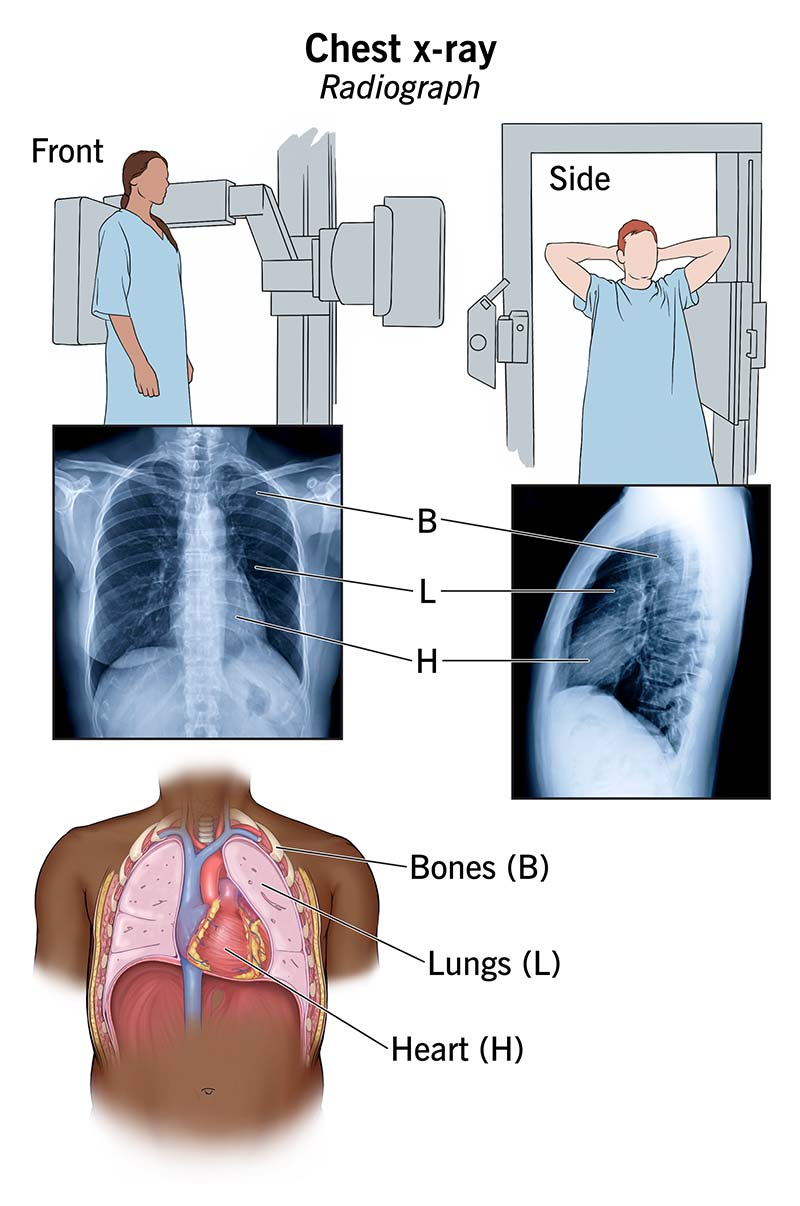
MedMind’s Chest X-Ray Interpretation Assistant is a structured, checklist-driven web app that helps clinicians interpret CXR images using a center-to-out algorithm (airway, mediastinum, hila, lungs, pleura, chest wall). Users can upload images, document image quality and key radiographic findings with on-hover/tap tooltips, and receive automatic section badges (Normal / Abnormal / Red-flag) plus an overall status summary. The app then generates a PII-minimized, clipboard-ready AI prompt (with optional identifier inclusion) to support consistent reporting, differential framing, urgency recognition, and next-step recommendations.


Vacc𝒾nes (Free version)
The application is a structured vaccination data-entry assistant that captures demographics, clinical context/risk factors, and a complete immunization history.
It supports dose-by-dose documentation, including dedicated logs for recent live vaccines and blood/IVIG administrations that may affect vaccine timing.
It automatically generates a structured JSON export of the inputs and a ready-to-paste prompt for the chatbot of your choice, including a basic completeness check (missing info).
It includes help tooltips across all fields to guide accurate, consistent data entry.
It also provides Open/Save JSON and Print functions for straightforward case storage, retrieval, and documentation.

Η
εφαρμογή λειτουργεί ως δομημένος βοηθός καταγραφής στοιχείων για τον εμβολιασμό, συγκεντρώνοντας δημογραφικά, κλινικό πλαίσιο/παράγοντες κινδύνου και πλήρες ιστορικό ανοσοποίησης. Υποστηρίζει καταχώριση δόσεων ανά εμβόλιο, ειδική καταγραφή πρόσφατων ζώντων εμβολίων και χορήγησης αίματος/IVIG που μπορεί να επηρεάζουν τον χρονισμό.Παράγει αυτόματα δομημένο JSON των εισόδων και έτοιμη προτροπή για χρήση σε ChatBot της επιλογής σας, με έλεγχο πληρότητας (missing info).Περιλαμβάνει εργαλεία βοήθειας (tooltips) σε όλα τα πεδία για καθοδήγηση κατά τη συμπλήρωση.
Διαθέτει λειτουργίες Άνοιγμα/Αποθήκευση JSON και Εκτύπωση για εύκολη αρχειοθέτηση και επαναχρησιμοποίηση περιστατικών.


CTASS𝒾ST (Free version)
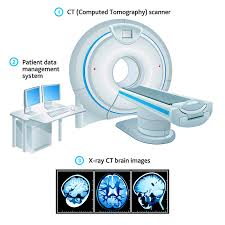
MedMind’s CTASS𝒾st application provides clinicians with a structured, workflow-driven way to review a CT image (full series or a single slice) inside an interactive viewer with zoom and measurement tools. It guides interpretation through a systematic checklist and standardized reporting logic, helping document key positives and clinically relevant negatives consistently. With one click, it generates a clear, clinician-friendly impression and recommendations, highlighting potential red flags and limitations (e.g., single-slice review). It also supports PII-minimized exports (prompt/report) for downstream clinical decision support discussions in an external LLM of the clinician’s choice. The overall aim is to increase speed, completeness, and reproducibility of CT documentation without replacing clinical judgment.


Depress𝒾on (Free version)
This clinical aid supports structured assessment and management of depression and generalized anxiety in outpatient/primary-care workflows. It provides PHQ-2 → PHQ-9 and GAD-7 scoring with automatic severity interpretation and integrated, guideline-style clinical suggestions. It includes a suicide risk module with ASQ screening plus C-SSRS-style itemization and documentation prompts for safety actions. A built-in medication picklist helps plan treatment with side-effect/monitoring checklists and regimen documentation.
The app generates an editable, PII-minimized prompt for use in any LLM, tailoring responses to the clinician’s preferred language, level, style, tone, and format. A curated References section links directly to key articles and primary validation studies for PHQ-9 and GAD-7.


FUO (Free version)
MedMind’s FUO is a friendly clinical decision aid for Fever of Unknown Origin. It guides clinicians through a structured history and physical exam, organizes “potential diagnostic clues,” and provides a checklist-driven minimal obligatory workup with an evidence-based stepwise pathway to escalation (imaging options, PET-CT triggers, and when to consider targeted sampling/biopsy based on findings). The app also generates a clean, ready-to-paste LLM prompt for clinical reasoning and documentation, with strong privacy defaults: the prompt includes only Age and Sex (no name, DOB, MRN, phone, or other identifiers). For practical use, it supports Open/Save JSON to continue a case later and Print for quick charting or handover note.


Best Test (Free version)
This clinical decision-support app helps a General Practitioner choose the best initial diagnostic test for a wide range of conditions, organized by organ system with fast search and filtering. It generates a PII-minimized clinical prompt (role-assigned) that includes pretest probability, test sensitivity/specificity, derived PPV/NPV, and an inline ROC mini-plot to support threshold thinking. The knowledge base is fully editable in-app, avoids duplicate entries, and allows adding custom (non-listed) conditions, with local-only storage for customization.

𝒾Derma (Free version)
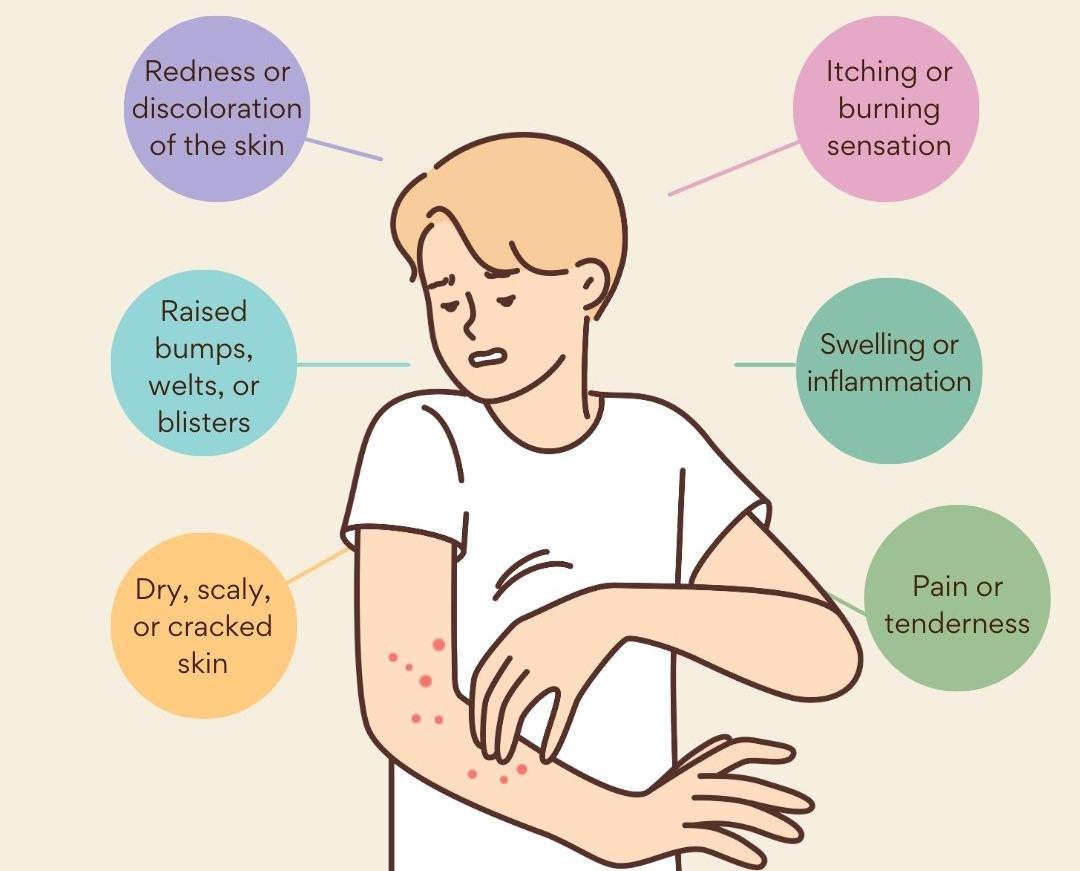
This MedMind’s new app helps health professionals perform a structured, step-by-step dermatologic triage and differential-building workflow using two common presentation pathways (“Rash” and “Red lesion(s)”). It first collects documentation preferences (language, audience level, style/tone, output format, and image-source constraints), then guides the user through a short decision algorithm (e.g., migratory vs non-migratory, mucosal involvement, pruritus, surface texture). At the end, it summarizes a working diagnostic bucket with top differentials, highlights urgent red flags requiring escalation, and provides a practical order-set (labs/imaging/consults) with safety considerations. Representative public-domain/Creative Commons lesion images are displayed alongside diagnoses, with an integrated zoom/pan viewer for quick visual reference.


MedStat (Free version)
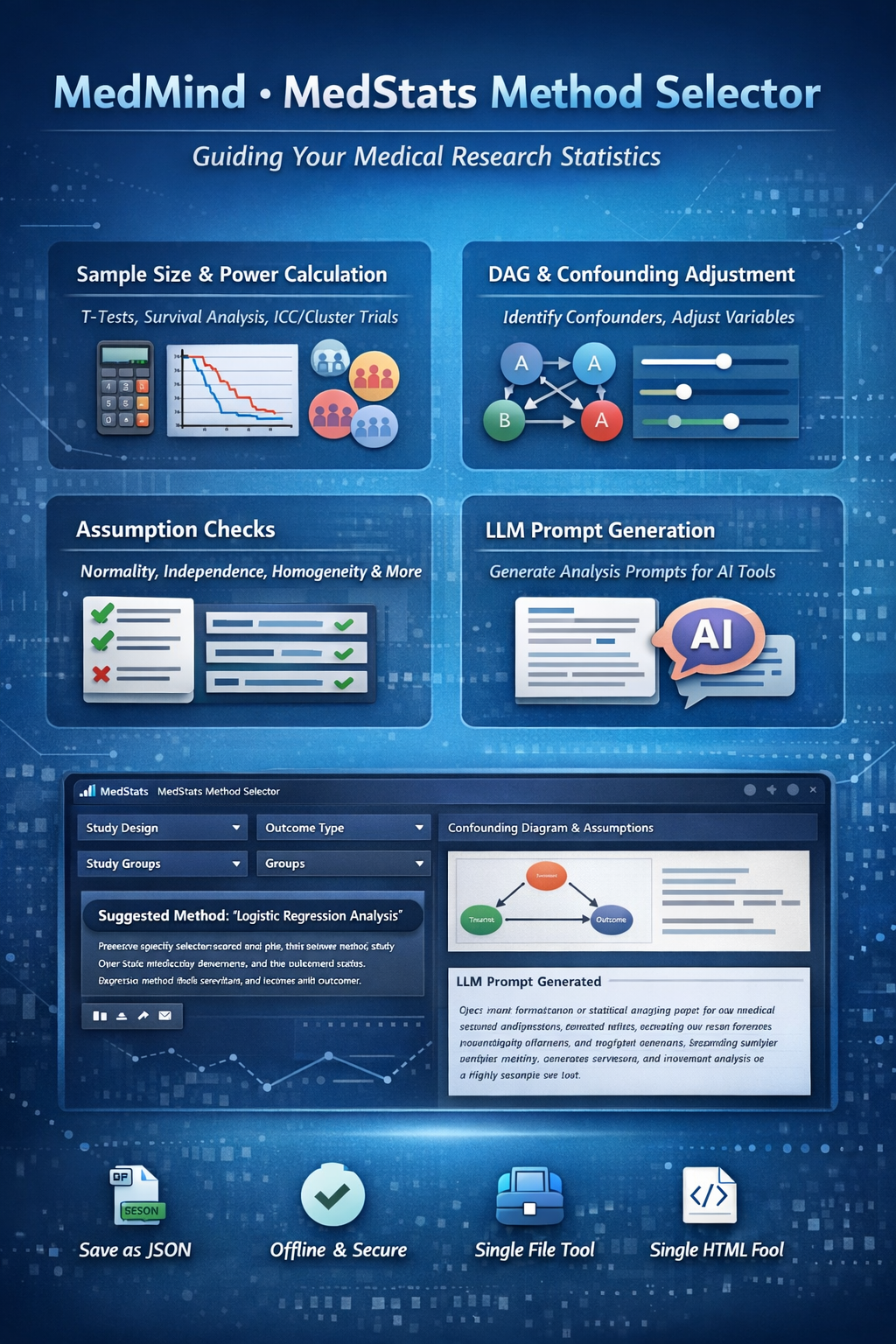
MedMind’s MedStats Method Selector is a web app that helps clinicians choose the right statistical approach for a medical research paper. It guides you through study design, outcome type, grouping, pairing, clustering, and adjustment needs, then recommends primary methods with effect sizes and reporting text.
Built-in modules add power/sample-size planning hints (including survival and ICC/cluster trials), plus an adaptive assumptions checklist. A lightweight DAG/confounding helper suggests sensible adjustment starting points and flags mediators/colliders.
It generates a ready-to-paste LLM prompt for statistical write-ups and reviewer responses.
You can export/import a complete “stats plan” as JSON for reproducible documentation alongside your data dictionary.


D𝒾abetes (Free version)
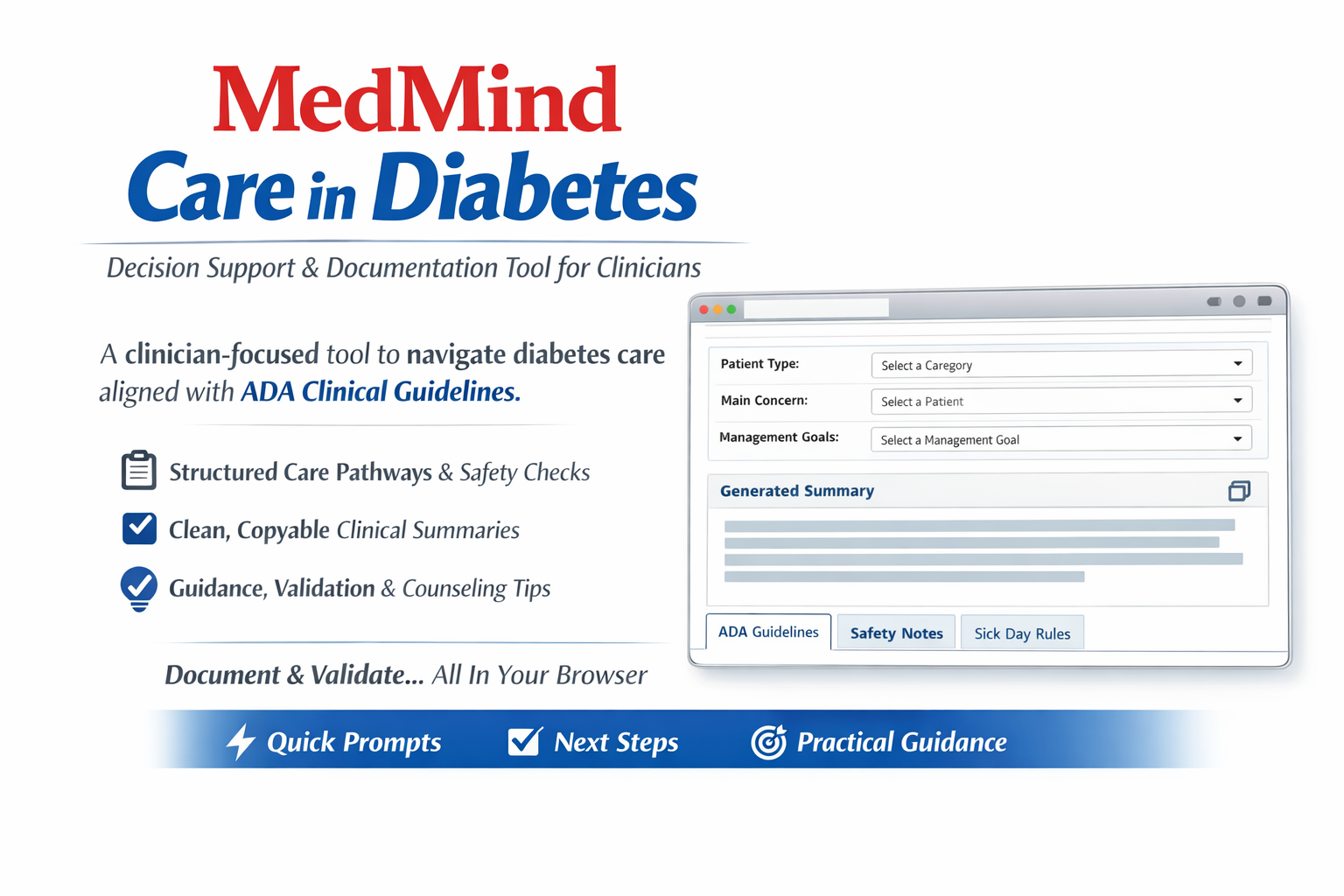
MedM𝒾nd Care in D𝒾abetes is a clinician-oriented decision-support and documentation tool based on ADA-aligned guidance. It helps you navigate common diabetes scenarios (Type 1, Type 2, GDM), follow structured care pathways, and surface safety checks and sick-day rules. You can enter patient context and select relevant guideline sections to automatically generate a clean, copy-ready clinical prompt/summary for documentation or AI-assisted review. The app also supports quick validation cues, “what to do next” checklists, and practical counseling points. Designed to be lightweight and fast, it runs entirely in the browser with a simple, workflow-first UI.


Infert𝒾l𝒾ty (Free version)
MedM𝒾nd’s Infert𝒾l𝒾ty is a web-based clinical tool designed to support the initial assessment of infertility in primary care. It guides clinicians through a structured decision pathway based on evidence-based clinical guidance. Users enter key clinical information such as female age, menstrual cycle pattern, duration of attempts to conceive, and risk factors. The application determines when infertility investigations should begin. It then suggests the most appropriate first-line diagnostic tests. These include semen analysis, ovulatory assessment, and tubal patency testing. The interface presents results in a clear, step-by-step clinical summary. This helps clinicians prioritize relevant investigations and avoid unnecessary testing. The application runs entirely in the browser with no uploads or external data transfer. It serves as a fast decision-support aid for primary care clinicians managing infertility.

Vo𝒾ce (Free version)
MedM𝒾nd Vo𝒾ce is an interactive clinical support app for the initial assessment of change in voice in primary care. It helps clinicians follow a structured, evidence-based diagnostic pathway based on key symptoms, duration, and red flags. The app guides decision-making for referral, further investigation, and identification of possible serious causes, including malignancy.
It is designed for rapid use, with a clear visual layout, practical prompts, and easy navigation during consultation.The tool runs locally in the browser, supporting privacy and simple everyday use without complex setup.
Its purpose is to make early voice-related assessment more systematic, consistent, and clinically useful.

_____________________________________________________________________________________________________________


The 𝒾nner Agora of Philosophical Counselling (Free version)Think of philosophical counselling as a modern Agora: a dedicated space for dialogue where people come not as “patients,” but as agents of their own lives. It appeals to those who feel stuck, troubled, or quietly under-challenged by the prose of everyday routine. They seek clarity and self-accountability—less “How should I live?” than the Socratic question, “What am I actually doing?”
This echoes the demand for an examined life, where choices, values, and aims are brought into the light. Reflection here is not abstract; it restores weight and meaning, often after disappointment, conflict, failure, boredom, or sudden change. The practitioner does not apply doctrines as recipes or deliver lectures. Instead, philosophy works on methods: it slows thinking down, exposes assumptions, and disrupts unhelpful mental habits.
The goal is not to impose a track, but to help the person move forward in their own way with greater lucidity. Unlike psychotherapy’s focus on psychogenic dysfunction, this approach treats the person as irreducibly unique, not a case under a theory. And in the spirit of the Agora’s civic role, it can also support groups and organisations in articulating convictions and guiding principles through disciplined conversation.

𝒾Counselling (Free version)
Πάντων νους κρατεί
Πάντων νους κρατεί

MedMind 𝒾Counselling is an interactive, clinician-friendly counselling “roster and map” that lets you explore major therapy traditions and their key figures. Use the left panel to browse blue menu groups (e.g., CBTs, Psychodynamic, Gestalt, Existential, EFT, etc.) and expand each group to see its subgroup of influential therapists. A fast search helps you locate any therapist instantly, while hover tooltips provide short contextual descriptions for both groups and individuals. The app is designed for quick orientation, teaching, and reference—keeping the information readable, structured, and easy to navigate.


SymptomGu𝒾de (Free version)

MedM𝒾nd SymptomGu𝒾de helps people describe their symptoms in a simple, clear, and organized way. It turns the information they enter into an easy-to-follow summary, highlights possible warning signs, and provides practical guidance on what to do next. The app also helps users prepare for a doctor’s appointment by organizing key details such as symptoms, medical history, medications, and any available test results. In addition, it can transform this information into a well-structured prompt for use with an AI tool. Its goal is to help people better understand their health information, communicate it more effectively, and feel more prepared before seeking medical advice.
⚠️
This tool is not a substitute for a proper medical examination by a licensed physician.


Live visitors Active